
Essential Pet Care Checklist For New Pet Parents

Bringing home a new pet is exciting, emotional, and honestly, a little overwhelming too. Whether you’ve adopted a playful puppy, a curious kitten, or an older rescue, the first few weeks are important. Your pet is adjusting to a completely new environment, and they depend on you for comfort, safety, and care.
The good news is that pet care doesn’t have to be complicated. With the right basics in place, you can give your new companion a healthy and happy start.
This essential pet care checklist covers everything new pet parents should know, from food and grooming to health, hygiene, and emotional well-being.
1) Set Up a Safe and Comfortable Space
Before your pet fully settles in, create a space that feels calm and secure.
This area should include:
- a clean sleeping spot
- food and water bowls
- toys for stimulation
- a litter tray or toilet area, depending on the pet
- a quiet corner where they can rest undisturbed
New pets can feel anxious in unfamiliar surroundings. A dedicated space helps them feel safer and adjust more easily.
Quick tip:
Keep harmful items out of reach, including electrical wires, cleaning liquids, medicines, small chewable objects, and toxic plants.
2) Choose the Right Food and Feeding Routine
Nutrition is one of the most important parts of pet care, especially during the early stages of growth and adjustment.
Your pet’s food should be based on:
- age
- breed
- size
- activity level
- overall health condition
Puppies and kittens need different nutrition than adult or senior pets. Feeding too much, too little, or the wrong type of food can affect growth, digestion, energy, and immunity.
Feeding essentials:
- use age-appropriate pet food
- keep fresh drinking water available at all times
- avoid frequent changes in diet
- do not feed random human food without checking if it’s safe
Foods commonly unsafe for pets:
- chocolate
- onions
- grapes and raisins
- caffeine
- spicy or oily foods
- cooked bones
A simple feeding schedule also helps your pet feel more settled and improves digestion.
3) Book the First Vet Visit Early
One of the first things every new pet parent should do is schedule a veterinary check-up.
Even if your pet seems healthy, an early vet visit helps you understand their current health status and future care needs.
A vet check-up may include:
- general physical examination
- vaccination guidance
- deworming schedule
- flea and tick prevention advice
- weight and growth monitoring
- diet recommendations
This is also the best time to ask questions about sleep, feeding, toilet training, scratching, chewing, or any unusual behavior.
Preventive care is always easier and more affordable than emergency treatment later.
4) Stay on Track with Vaccinations and Deworming
Vaccinations and deworming are essential for protecting your pet from common infections and health risks.
Many first-time pet parents underestimate how important this step is, especially if the pet appears active and healthy.
Why it matters:
Vaccines help protect pets from serious diseases, while deworming helps control internal parasites that can affect digestion, growth, and immunity.
Your vet will usually suggest a schedule based on your pet’s:
- age
- medical history
- vaccination status
- lifestyle and exposure risk
Keeping a simple health record or pet file can make future care much easier.
5) Start Basic Grooming Early
Grooming is not just about appearance. It plays a big role in your pet’s comfort, hygiene, and overall health.
Regular grooming can help with:
- shedding control
- skin health
- coat cleanliness
- ear hygiene
- nail care
- dental health
Basic grooming checklist:
- brush your pet regularly
- bathe only when needed
- clean ears gently and safely
- trim nails carefully
- check paws for dirt or irritation
- maintain oral hygiene
Starting these routines early helps your pet get used to handling and reduces stress later.
6) Focus on Hygiene and Clean Living
A clean environment is essential for both pets and pet parents.
Make sure you regularly clean:
- food and water bowls
- bedding and blankets
- litter trays or toilet areas
- toys and feeding mats
- grooming tools
Poor hygiene can lead to unpleasant odors, skin issues, digestive problems, and even infections.
Simple daily cleaning habits can make a big difference in your pet’s comfort and health.
7) Support Emotional Well-Being Too
A lot of people focus only on food and medical care, but emotional health matters just as much.
New pets often go through stress during the adjustment period. Some may hide, bark, scratch, whine, or refuse food for a short time. That doesn’t always mean something is wrong. It can simply mean they’re still settling in.
To help your pet feel secure:
- keep a calm routine
- avoid too many visitors in the beginning
- speak gently
- give them time to explore
- avoid punishment-based training
- reward calm and positive behavior
Trust takes time. A patient, predictable environment helps pets feel safe and build confidence.
8) Make Time for Play and Physical Activity
Exercise and play are essential for your pet’s physical and mental health.
Without enough activity, pets can become:
- bored
- destructive
- anxious
- restless
- overweight
Daily enrichment ideas:
- short walks
- chew toys
- puzzle feeders
- fetch games
- interactive play sessions
- climbing or scratching areas for cats
Even 15 to 20 minutes of focused play can improve behavior and strengthen your bond.
9) Learn to Watch for Early Warning Signs
One of the best things a pet parent can do is notice changes early.
Pets often show small signs before a health issue becomes serious.
Watch out for:
- loss of appetite
- vomiting or diarrhea
- unusual scratching or licking
- low energy
- sudden aggression or hiding
- coughing or sneezing
- bad breath
- changes in toilet habits
- hair loss or skin irritation
If something feels “off,” it’s always better to check sooner rather than later.
10) Build a Simple Daily Pet Care Routine
Pets do best when life feels predictable.
A basic routine helps with:
- feeding
- toilet training
- sleep
- exercise
- emotional security
- better behaviour
A simple daily routine may include:
- morning feeding
- walk or playtime
- fresh water refill
- rest time
- grooming check
- evening meal
- bonding or training time
You don’t need a perfect schedule. You just need consistency.
New Pet Parent Checklist at a Glance
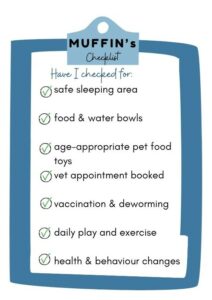
Here’s a simple summary you can follow:
Essentials checklist:
- safe sleeping area
- food and water bowls
- age-appropriate pet food
- toys and enrichment items
- vet appointment booked
- vaccination and deworming plan
- grooming supplies
- hygiene and cleaning routine
- daily play and exercise
- observation of health and behaviour changes
These basics can go a long way in helping your pet thrive.
Becoming a pet parent is a big responsibility, but it’s also one of the most rewarding experiences. You do not need to know everything on day one. What matters most is being attentive, consistent, and willing to learn.
A healthy pet routine starts with simple daily care, preventive health habits, good nutrition, and a lot of patience.
At Enavant Pet Care, we believe better pet care starts with informed pet parents. The more you understand your pet’s everyday needs, the easier it becomes to give them the healthy, happy life they deserve.